Desktop Resin Injection Molding
Precision-engineered shredder linkage and a design guide for molding self-shredded recycled plastic
Injection molding typically serves mass production: millions of parts from costly metal molds. But what if you need just 100 precision, mechanically robust components in resource-constrained settings? To what extent can self-made resin molds bridge this gap, enabling DIY production of high-fidelity plastic parts without industrial infrastructure?
As a visiting researcher at the Global Health Engineering Lab, ETH Zürich, under Prof. Elizabeth Tilley and supervised by Dr. Jakub Tkaczuk, during my exchange semester in mechanical engineering, I explored the use of resin molds for recycled plastic injection molding, building on the work of Precious Plastics and previous ETH Zürich projects. The goal was to develop practical guidelines for designing and manufacturing resin molds that can be used with recycled plastics like PP (polypropylene) and HDPE (high-density polyethylene) in small-scale recycling operations using the Holimaker Holipress Desktop Injection Moulding Machine.
Gaugey
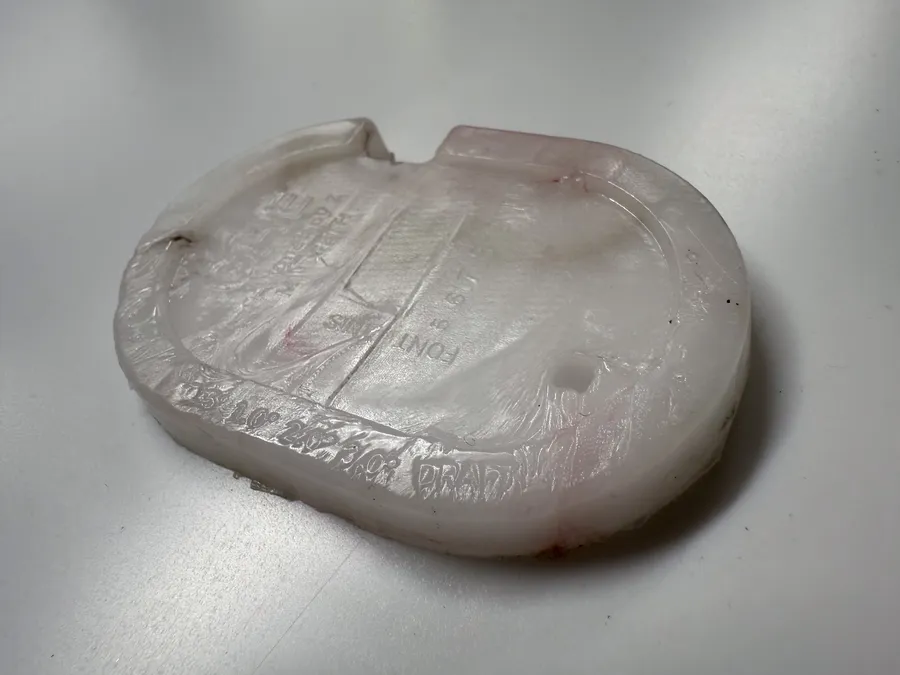
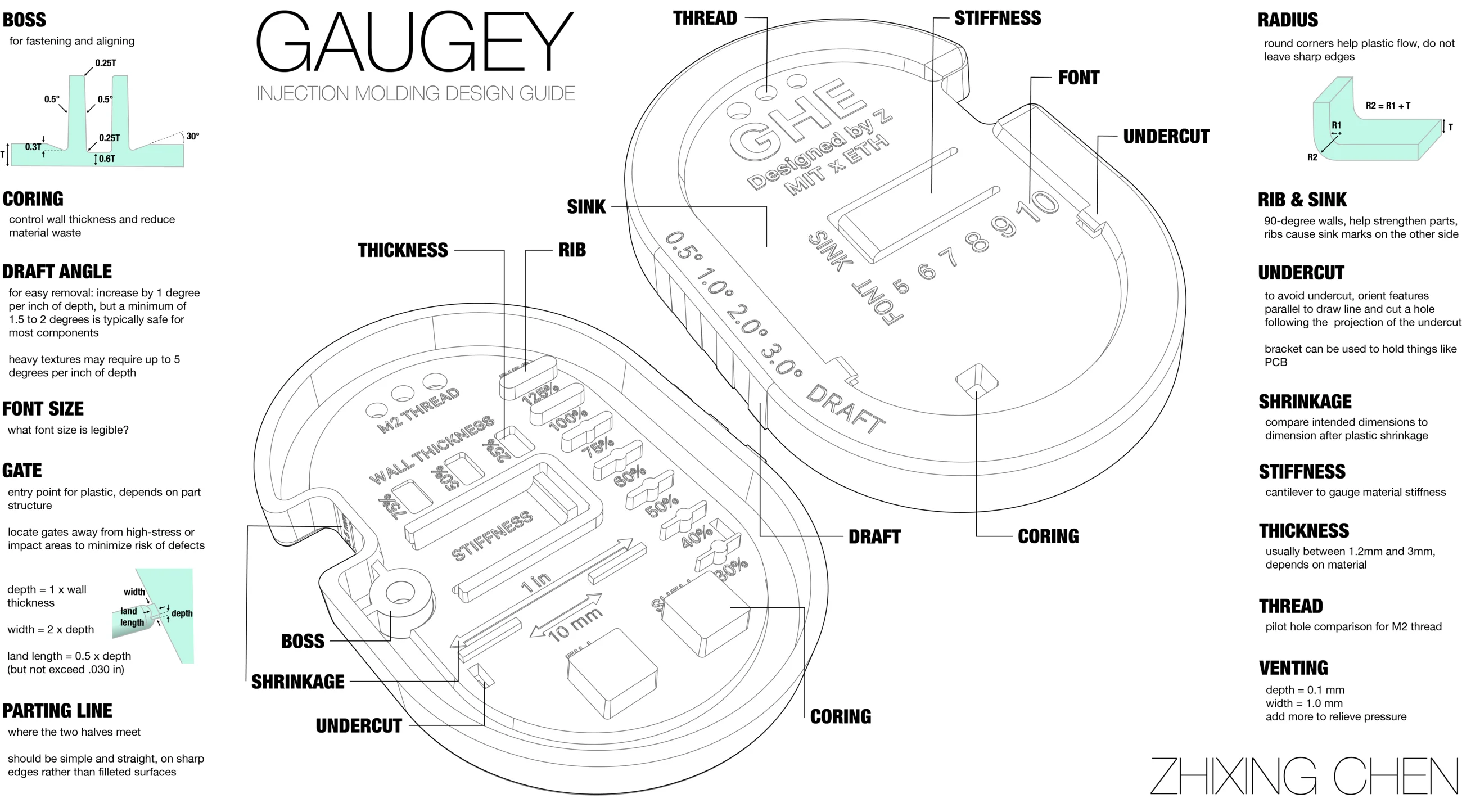
Gaugey is a design rule test piece inspired by Benchy (3D printing) but for injection molding using resin molds. It aims to push the limits of the Holipress machine and resin molds, with a boss for a threaded insert, coring, draft angles, font sizes, the gate, the parting line, radii, ribs and sink, an undercut, shrinkage, stiffness, wall thickness and venting configurations.
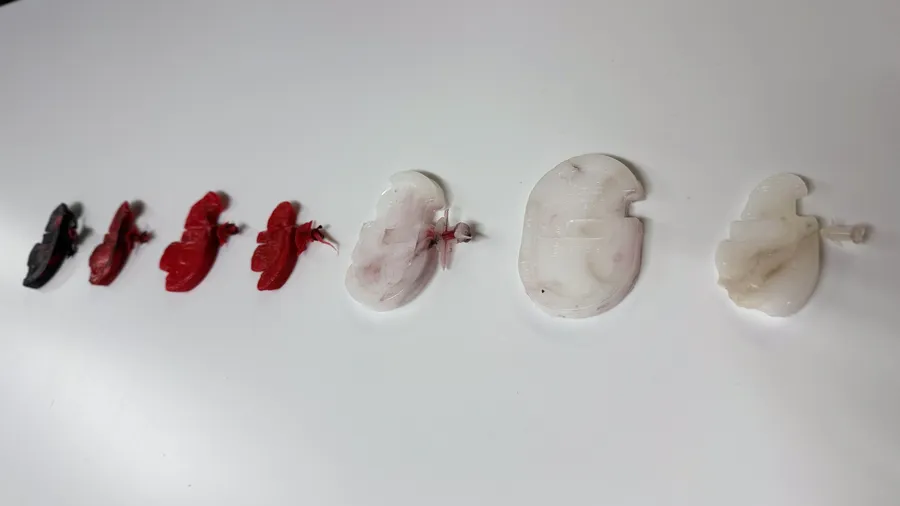
The molds were first tested with grey resin, which did not mold well, and then Rigid 10K, all printed on a Formlabs Form 3+. The resin expands (60 mm became 60.5 mm after warming and 60.3 mm after cooling), so dimensions were reduced by 0.4 mm to compensate. Undercut walls were strengthened, and vent depth increased from 0.05 mm to 0.1 mm. PP worked best at 230 °C and HDPE at 270 °C, with a cooling time of about a minute, and heating the resin with a heat gun improved plastic flow.
Motorized shredder linkage
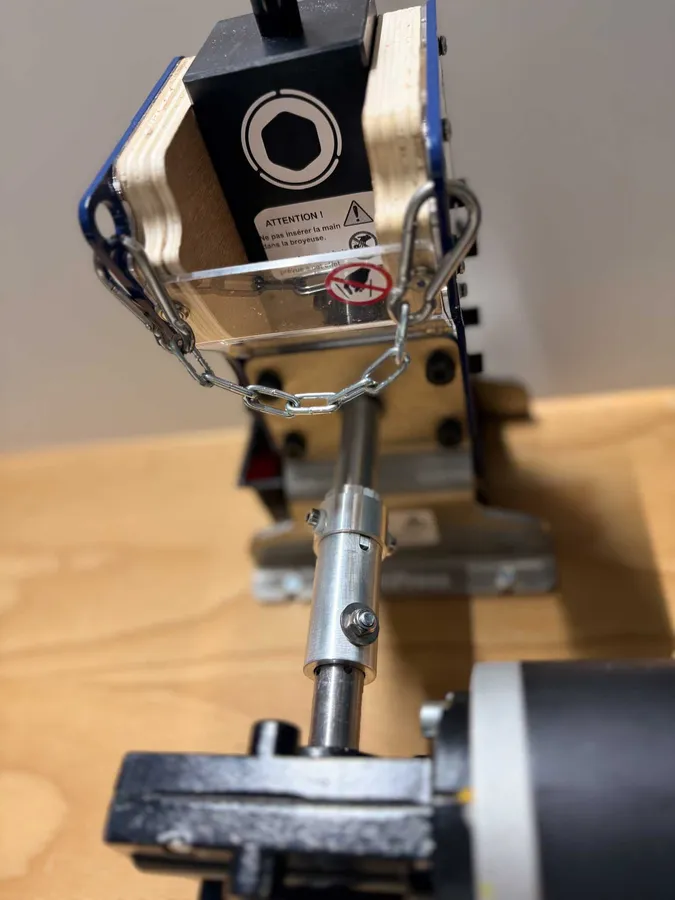
The lab's Holimaker Holishred manual shredder requires intensive effort to process just 1 bottle cap per minute. To shred HDPE caps for molding instead of buying PP pellets online, I engineered a motorized linkage system that increased shredding capacity from 1 to 20 bottle caps per minute, eliminating manual labor.
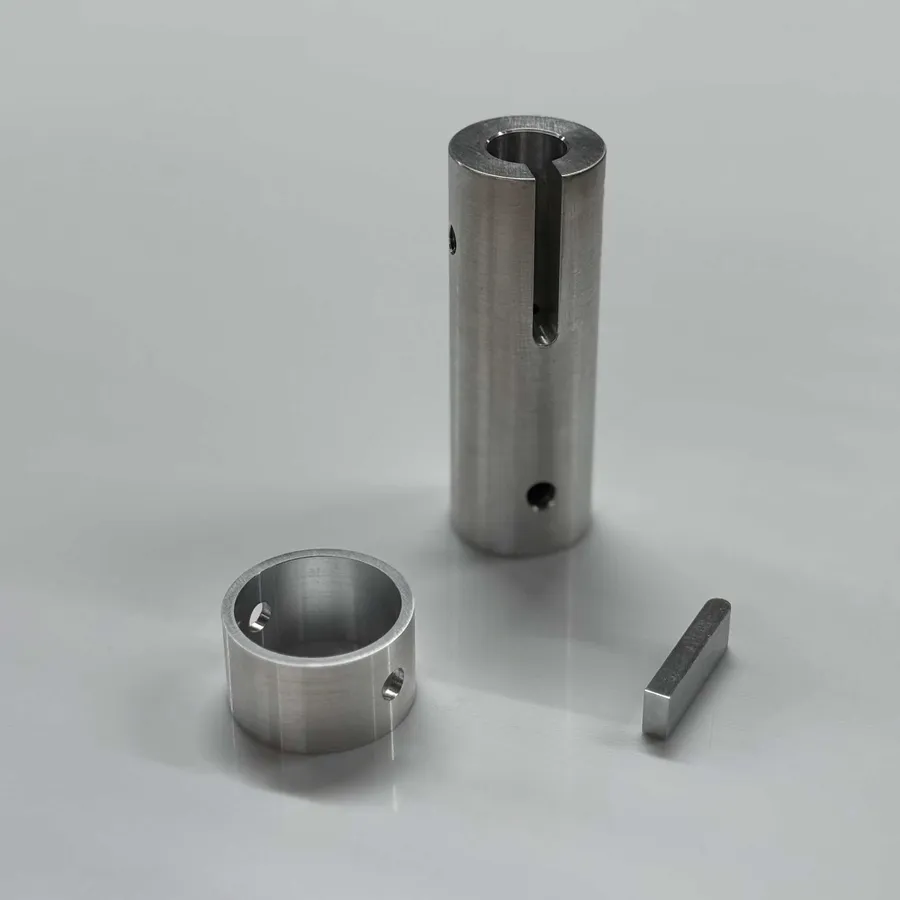
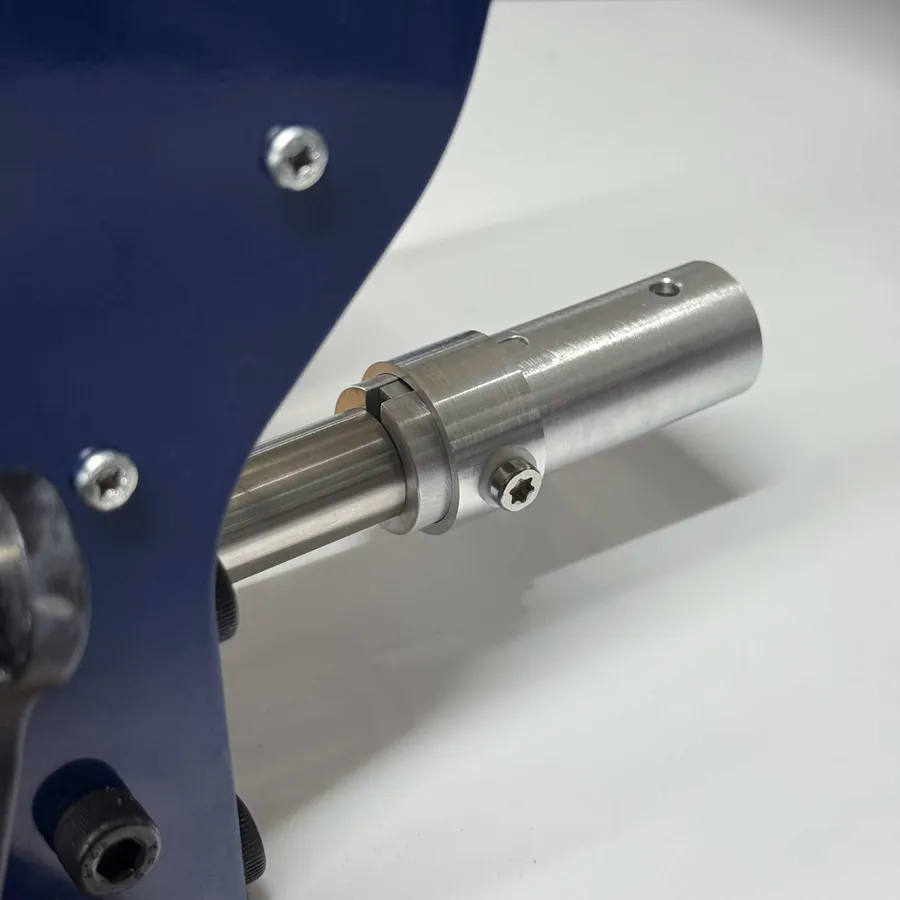
Initial attempts with slotted spring pins proved problematic, so the design became a C-shape extrusion with a disk clamp. It was machined through JLC PCB for $91.09, with a laser-cut wooden stand to hold the motor, and was confirmed a perfect fit on 15 May.
What we learned
- Venting is paramount: 4 primary vents along the 100 mm parting line, 2 secondary vents, and 1 bigger drain hole opposite the gate if that is not enough.
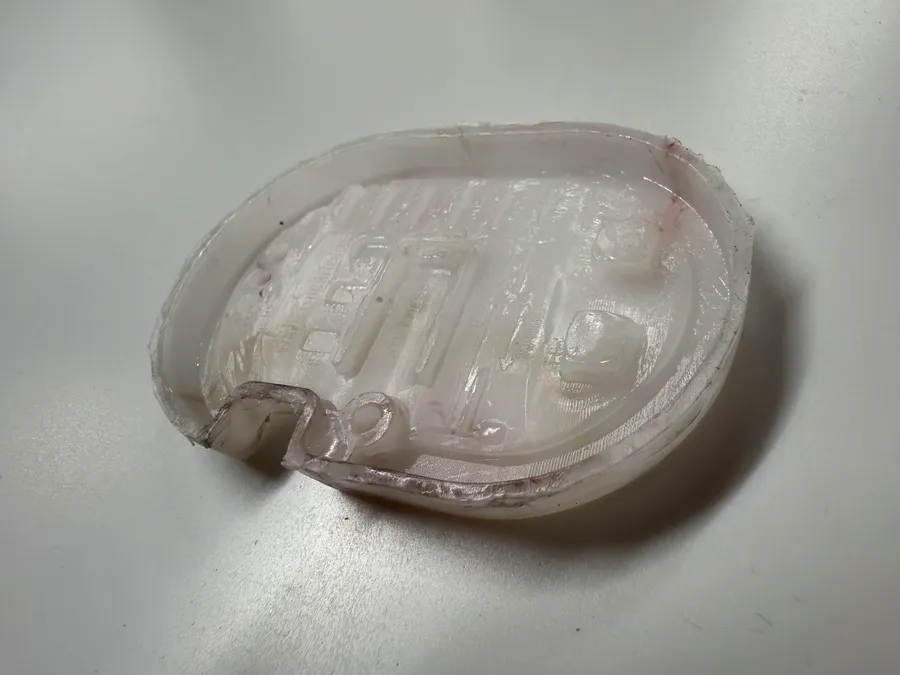
- Undercut flanges in resin molds are fragile. With two cantilevers, strengthening one weakens the other, so undercuts work best with metal molds.
- Functional PP molding was achieved, with 1.6% shrinkage in length and width. Height varied more, +12.4%, probably because the mold could have been clamped tighter.
- PP is more forgiving than HDPE, which needs a different temperature profile and gate and vent changes to flow.
- 3D printed resin molds can withstand limited injection cycles, but detailed features will chip off as cycles increase.
Overall, desktop injection molding with resin molds is difficult, especially when using manual machines that lack adjustable parameters like speed and pressure. While the process is challenging, resin molds can be effective for small-scale injection molding using recycled plastic, provided design principles are adhered to.