Chill Wagon
A bike trailer that keeps produce cool on the way to market
Problem
Farmers on small farms in South Africa travel 1 to 15 km to bring produce to market, and many do not own a vehicle. They rent one, borrow one, or hire a delivery service. Each costs money, and each depends on someone else's vehicle and driver showing up.
A plain bike trailer would not fix it, because produce wilts in the daytime heat on the way. So the trailer has to cool, and without electricity: batteries cost too much and the grid is too unreliable to count on.
Our interviews filled in the picture. Farmers hire trucks that can be out of service for months right at planting or harvest. The roads to farms are gravel with hills. The riders would mostly be 20 to 35. Loads are small, several kinds of vegetable at once, and ice is not available.
Design
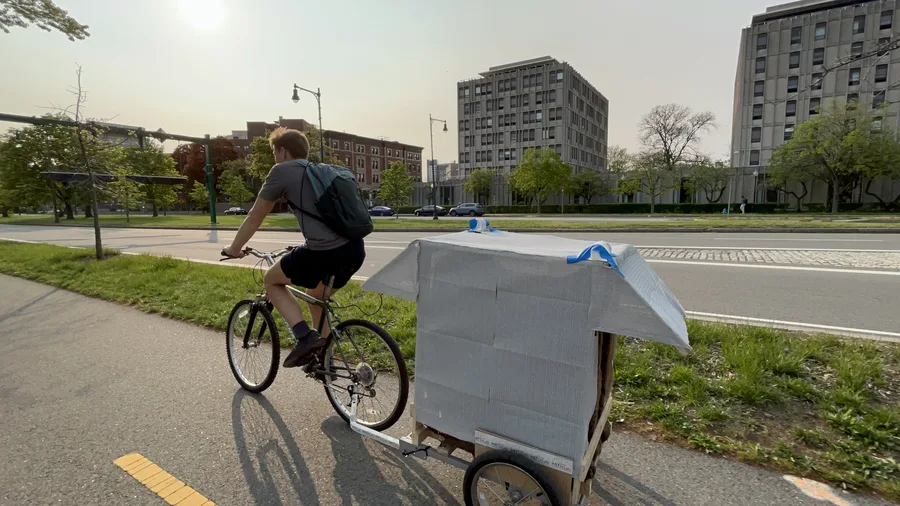
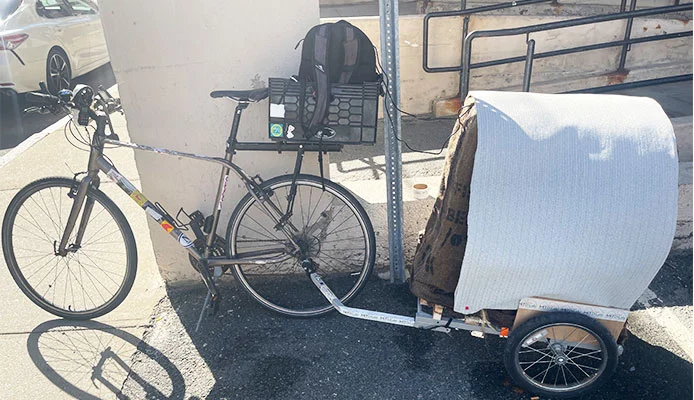
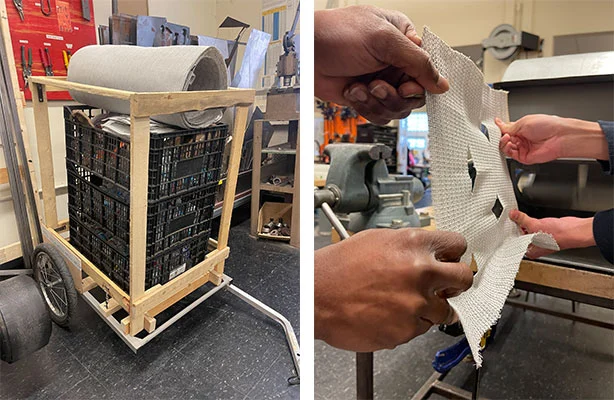
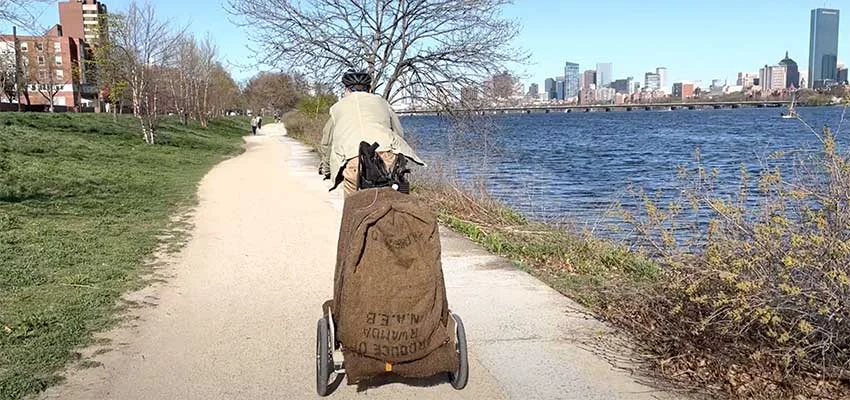
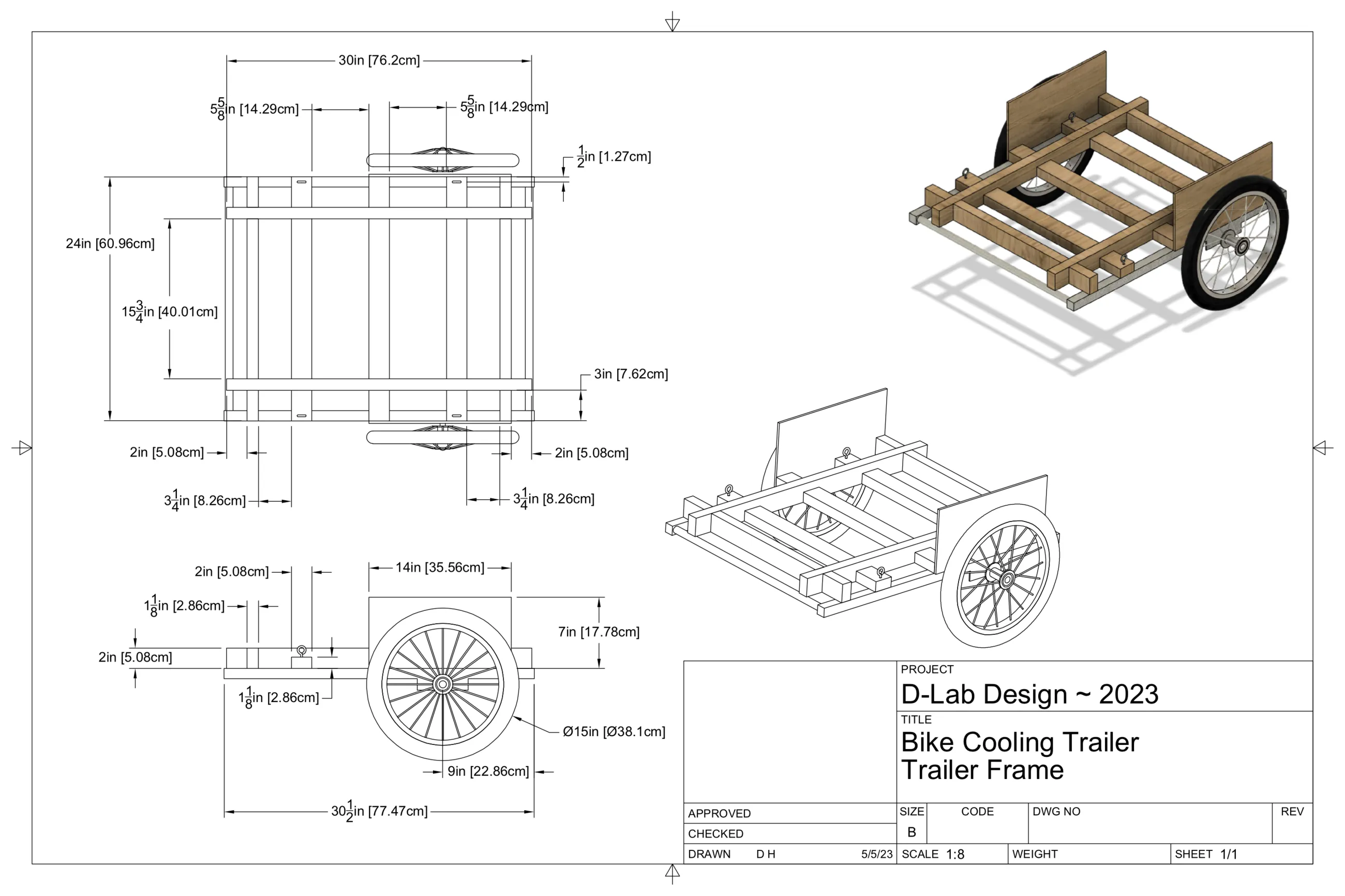
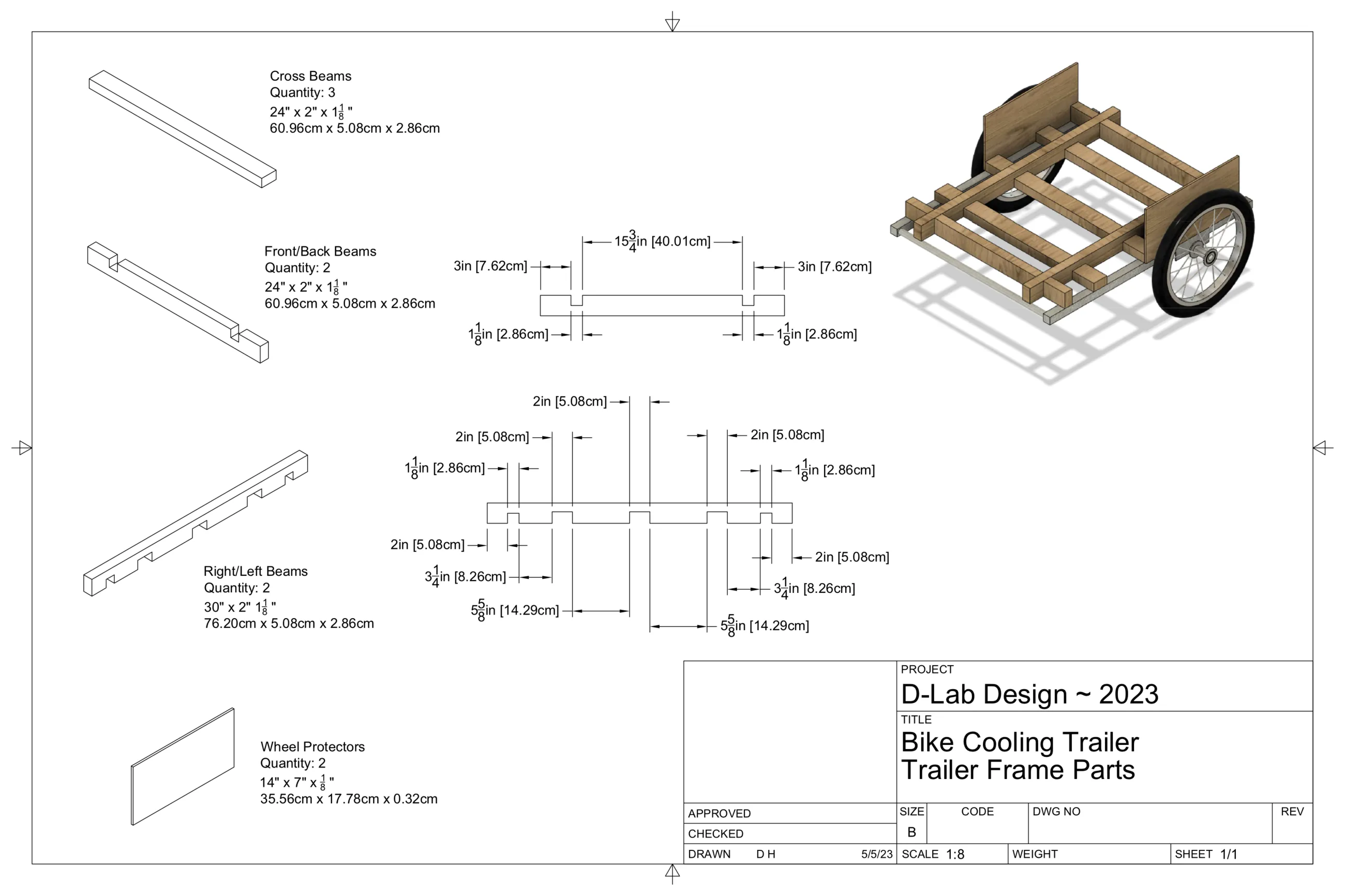
We started from a bought steel bike trailer base, 24 by 30.5 in, and built a wooden frame on it from slotted beams that fit into each other. Three stacked vented crates, each 15.5 by 23.5 by 9.5 in, hold the produce. A wet jute sack, sewn together from smaller sacks, goes over the stack, and the air moving past as you ride evaporates the water out of it.
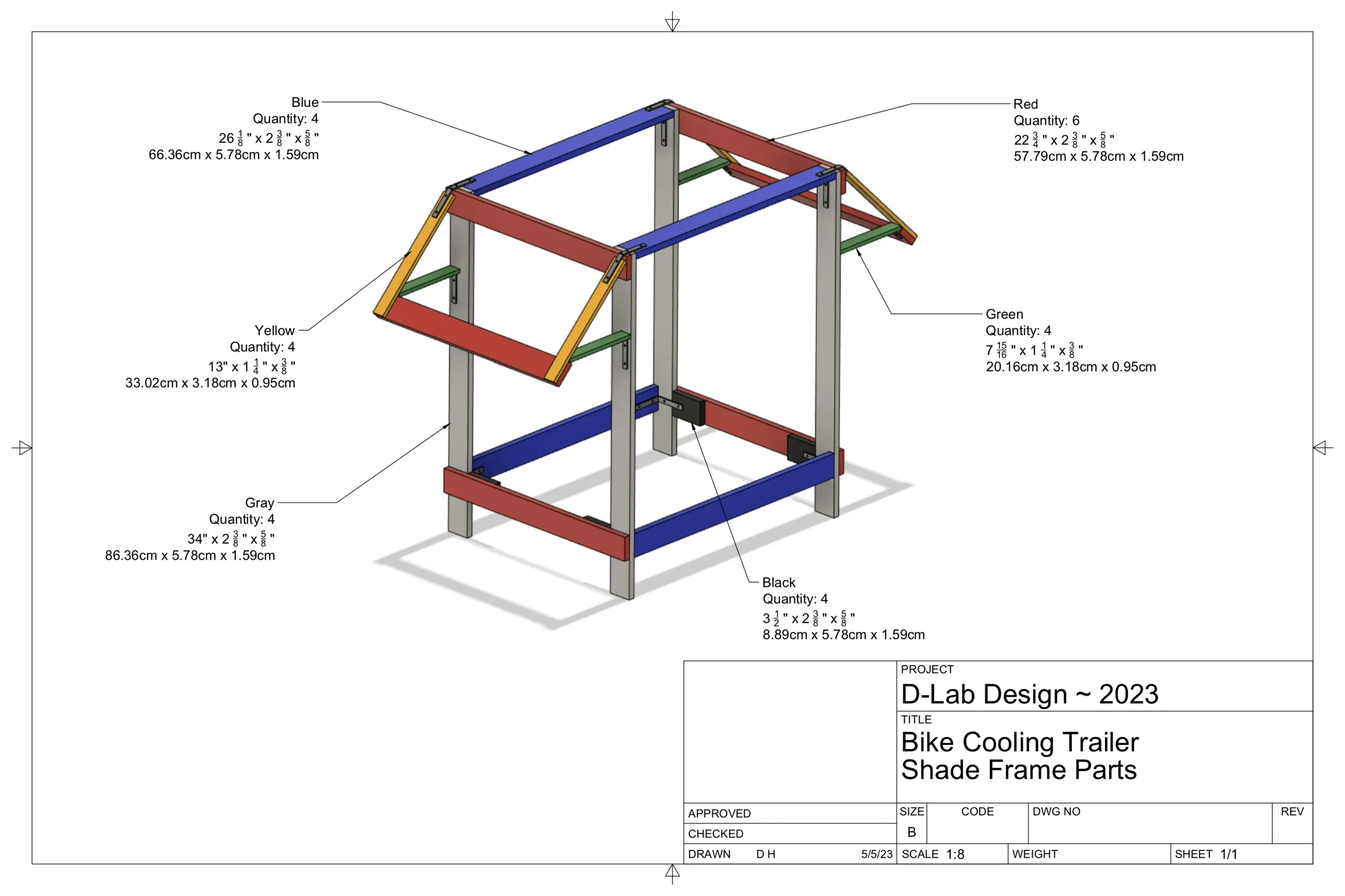
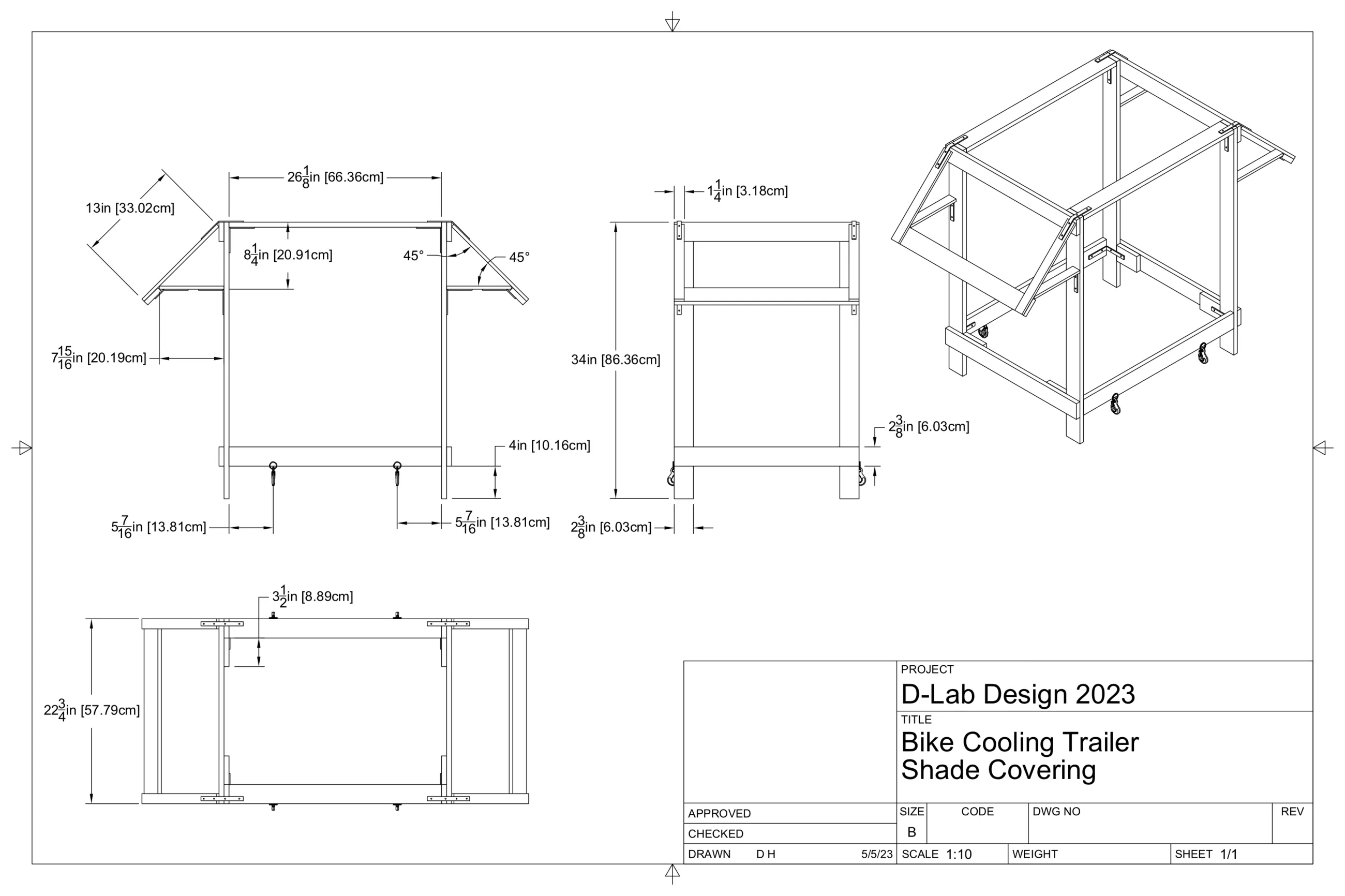
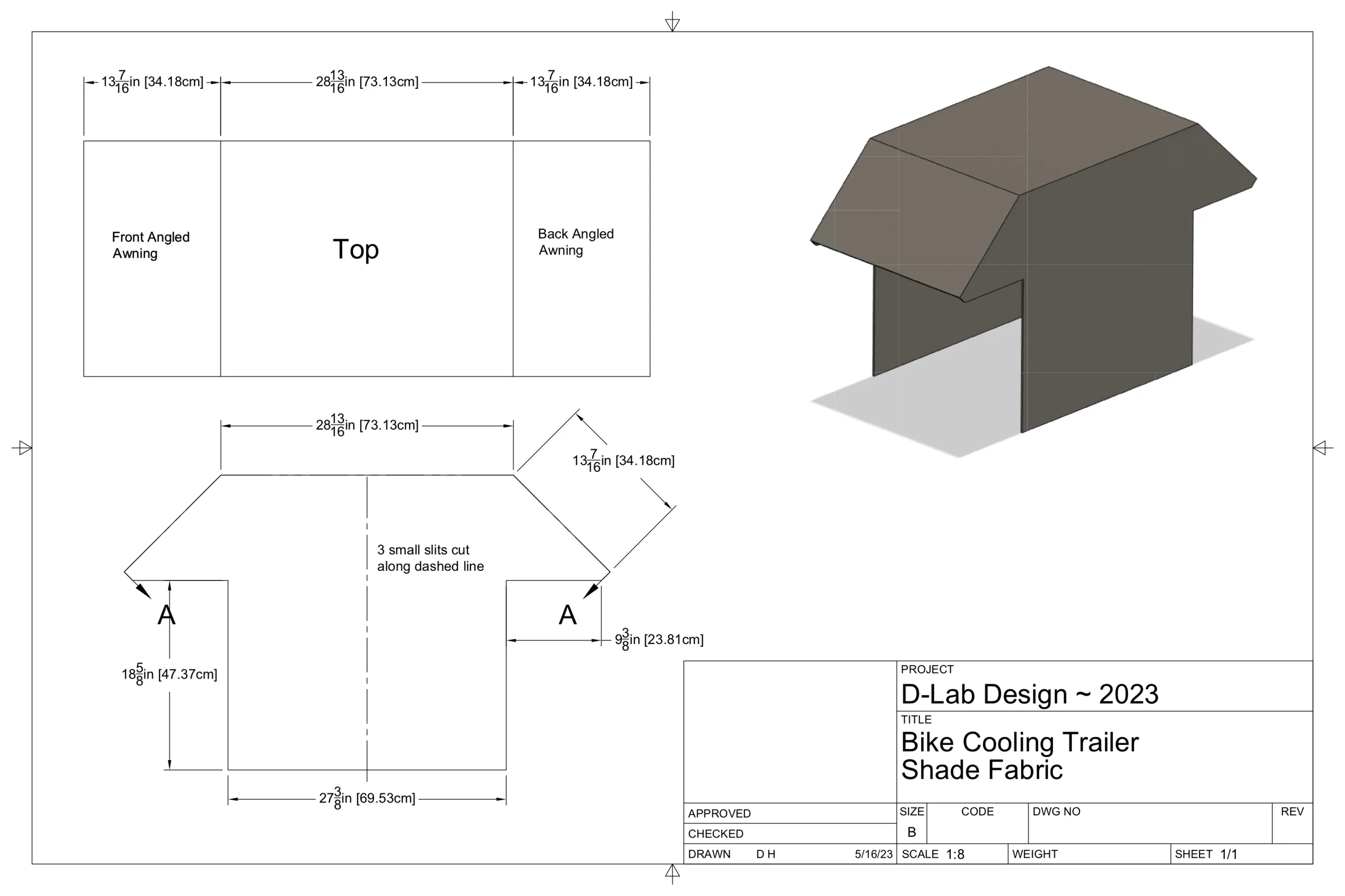
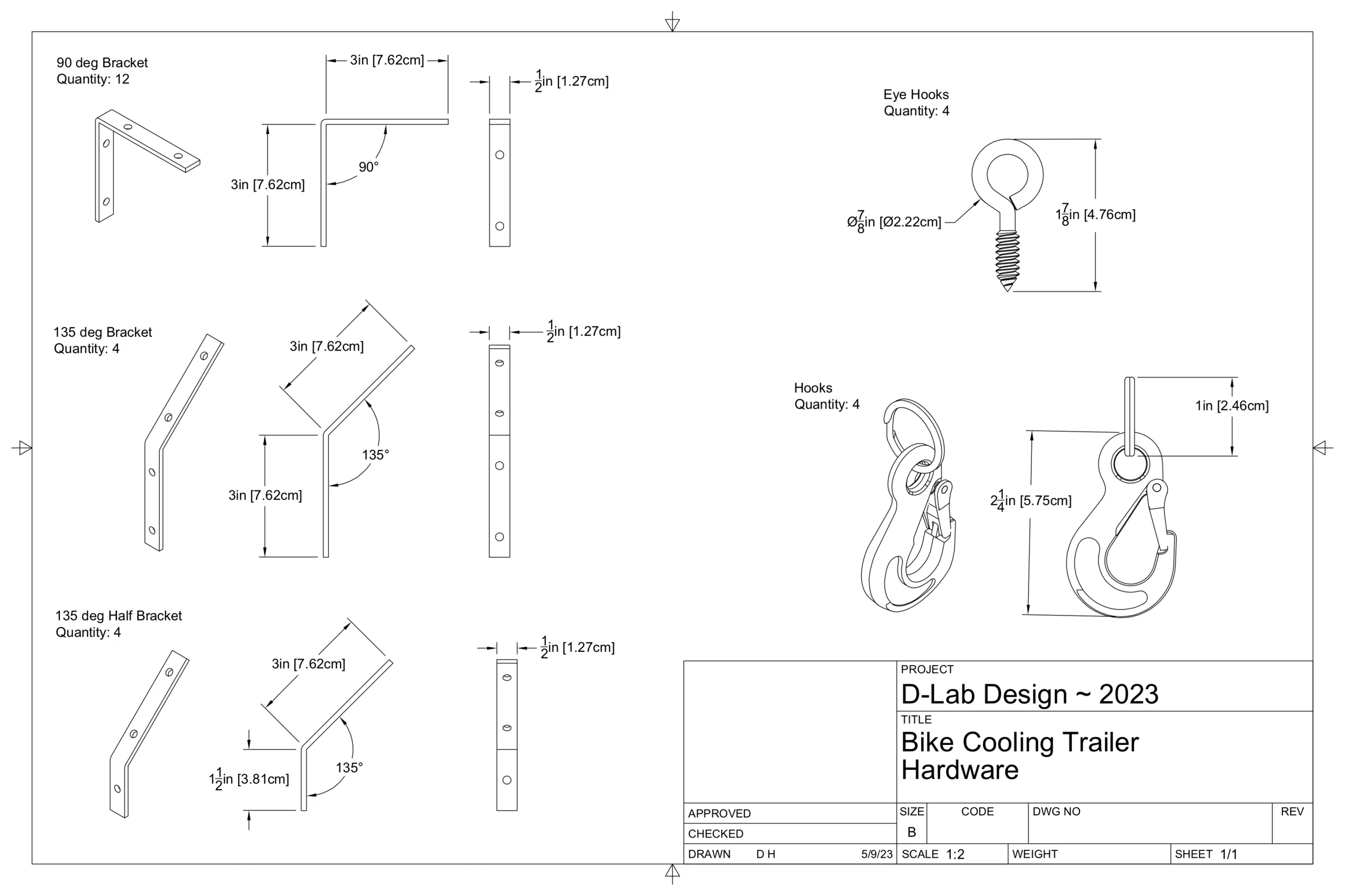
Over that sits a removable wooden shade frame with two awnings, covered in HDPE shade fabric with slits cut in the sides for airflow. The front and back stay open so air can move around the crates. The frame clips to eye hooks on the trailer.
The parts come to about $211 with the bought trailer, or about $126 with a base built from steel bars. The instructions, drawings and materials list are written so someone else can build it, and they end with what we would change: a welded steel frame, eye hooks that are easier to reach, and a shade frame that is easier to lift over the crates.
Experiments
-
23 March 2023
Insulation
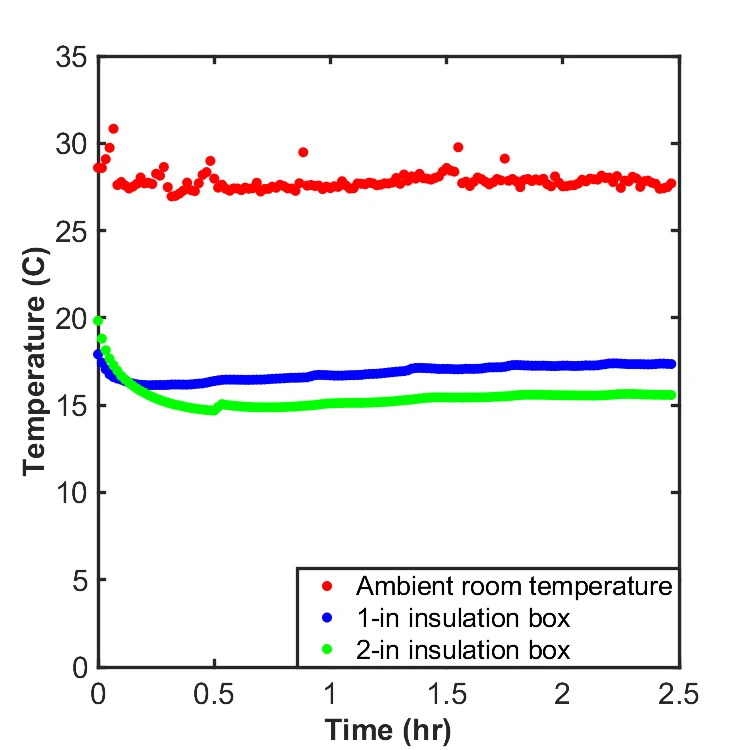
Two insulated boxes, one with 1 in walls and one with 2 in, logged side by side for 2.5 hours in a room at about 28 °C.
ResultThe 2 in box settled around 15 to 16 °C and the 1 in box around 17 °C: the thicker wall held about 2 °C cooler.
-
23 March 2023
Weight capacity
Cameron and Diane each towed a loaded trailer uphill and downhill on a campus path.
ResultFilmed, not measured: no load or speed was logged for this one, so the videos are the record.
-
8 April 2023
Evaporative cooling, indoors
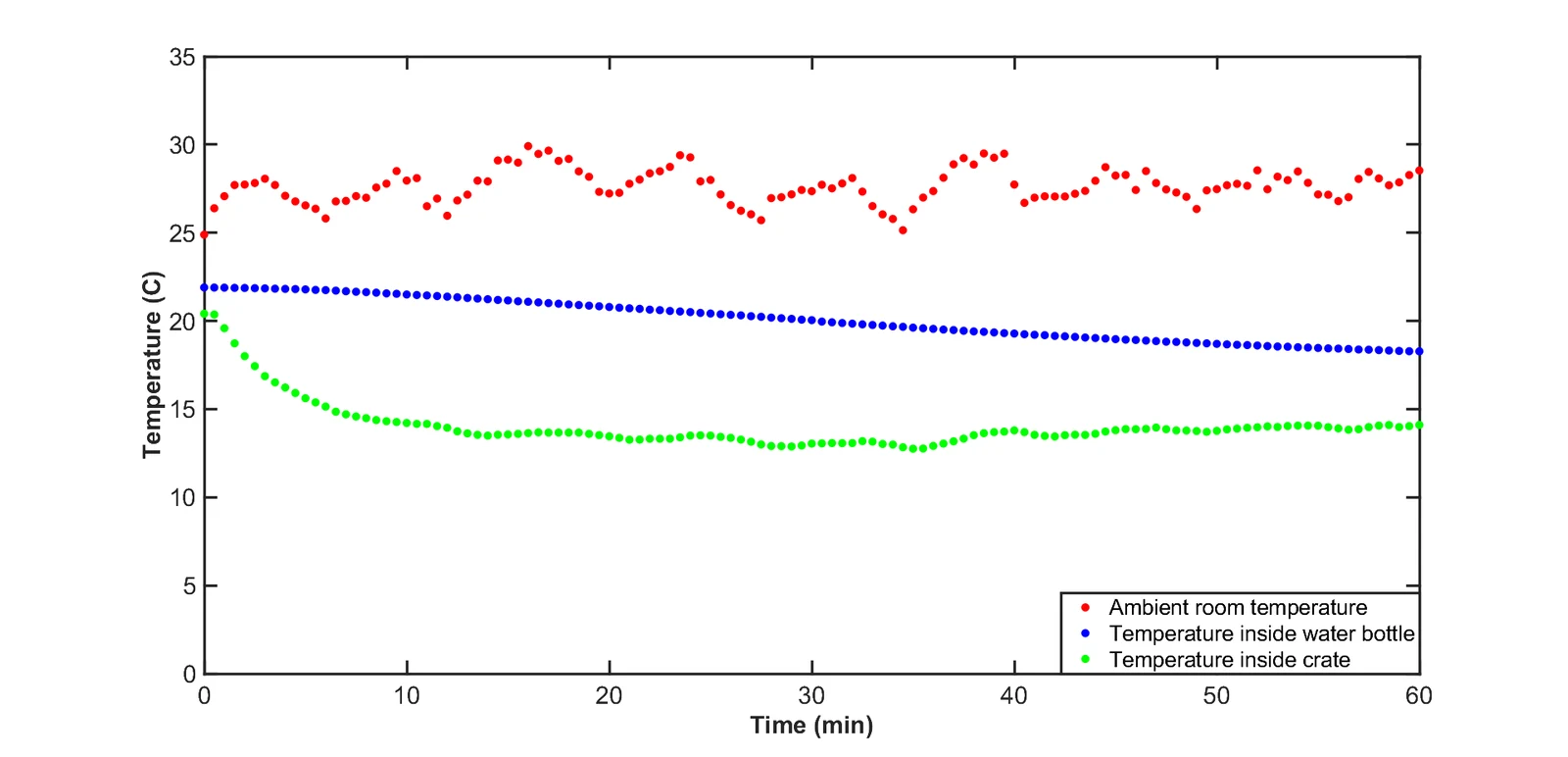
The cooling on its own, indoors, for an hour, in a room averaging about 28 °C, with probes in the crate air and inside a water bottle.
ResultCrate air fell from 20.4 °C to 13.6 °C within 15 minutes, bottomed out at 12.8 °C, and was still 14.1 °C after the hour. The water in the bottle fell more slowly, from 21.9 to 18.3 °C.
-
20 April 2023
Full system outdoors, with and without shade
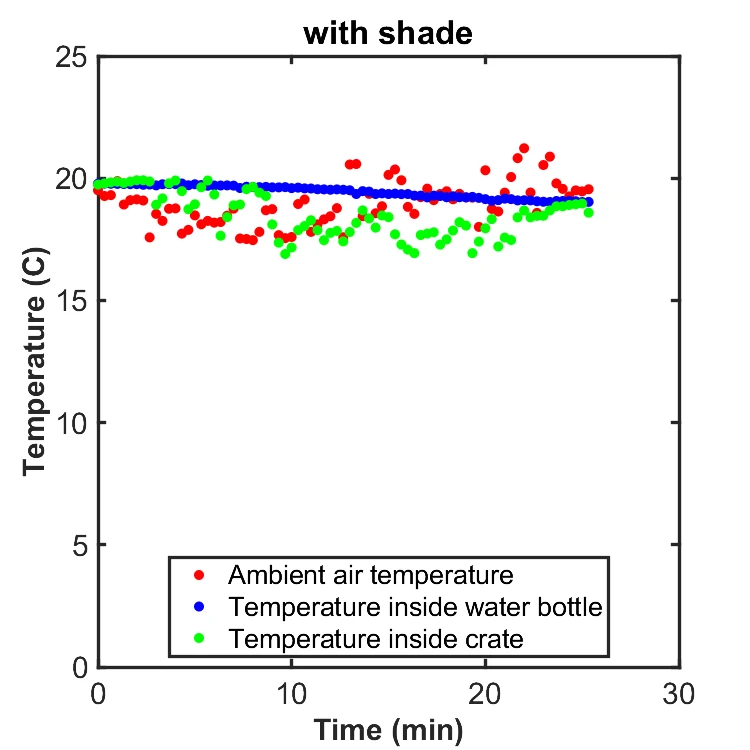
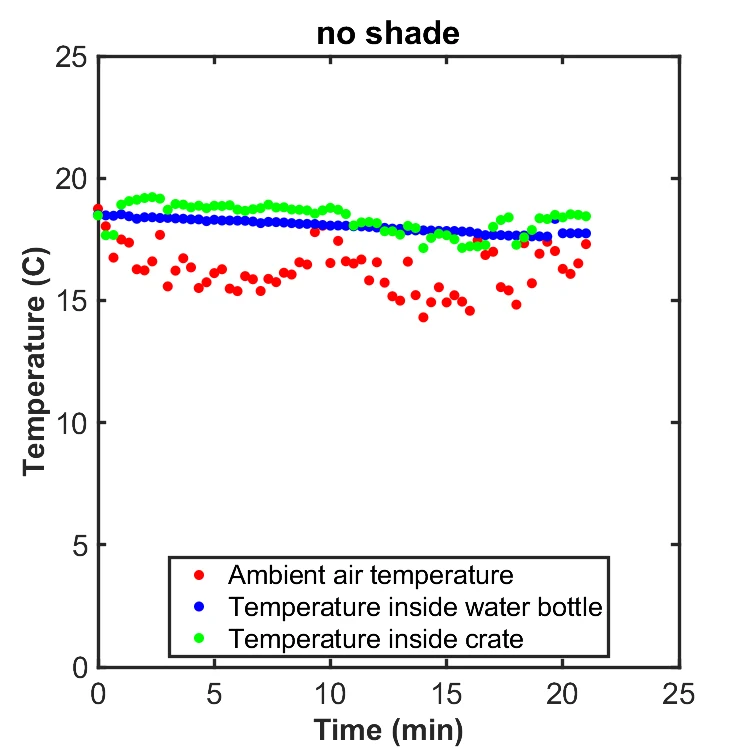
Two short rides with the whole system, one with the shade frame on (about 25 minutes) and one without (about 21 minutes).
ResultWith the shade, the crate air stayed at or a little below the outside air. Without it, the crate air sat above the outside air for most of the ride. The outside air was different on the two rides and no raw data was kept, so this is read off the plots.
-
8 May 2023
Final ride
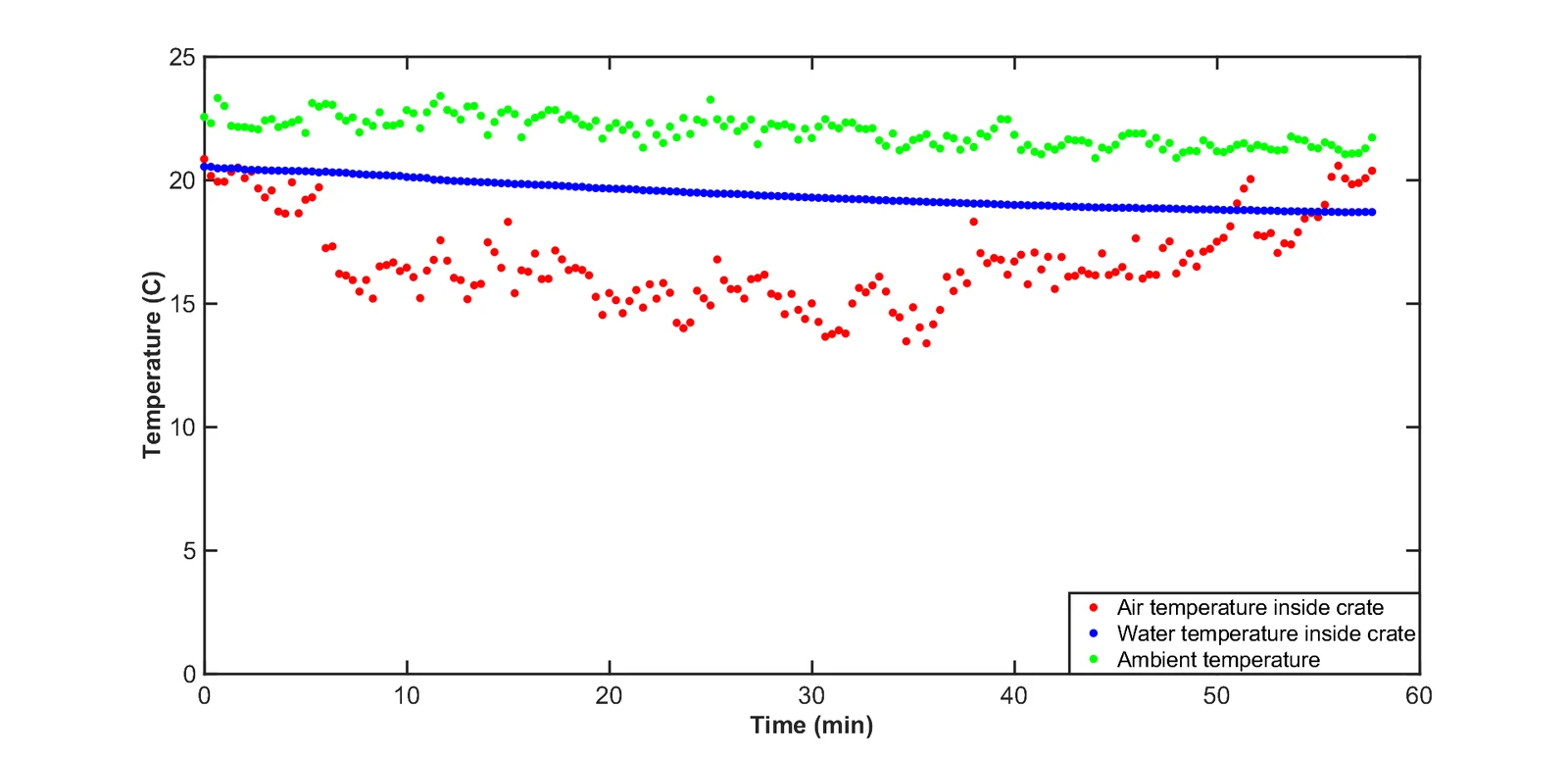
50 kg of water bottles in three crates, under the wet jute sack and the shade frame, ridden for 54 minutes and 6.37 miles at 7.1 mph average, on mostly flat paved roads and bike paths. The outside air averaged 22.0 °C.
ResultCrate air fell 7.4 °C in about half an hour, from 20.8 °C to a low of 13.4 °C at 35 minutes, then climbed back to 20.4 °C as the sack dried out. So a ride should stay near 30 minutes, or the sack needs wetting again halfway. The trailer took five drops off a curb of about 4 in with no damage. On the one 3.5 percent hill the rider struggled in the lowest gear at 50 kg.
Drawings
The six drawings from the build package. Click one to see it full size.
Team and partners
D-Lab: Design at MIT, spring 2023, taught by Eliza Squibb and Sorin Grama. The team, Steel Stallions, all MIT:
- Cameron Dougal '25, Urban Science and Planning with Computer Science
- Diane Heinle '23, Mechanical Engineering
- Oliver Chinn '23, Mechanical Engineering
- Runako Gentles '24, Civil and Environmental Engineering
- Zhixing Chen '25, Mechanical Engineering, Art and Design
Community partners: The Goedgedacht Trust, a farm-based community support organization (Matthew Purkiss), and Atlantic Fellows (Dorah Marema).